
OMG and it is the final weekend of September and fall is now here!
Hope everyone is ready for it?
Today, our president Donna J. Jodhan has a serious topic to share.
All about the advantages and disadvantages of apps for persons with disabilities.
Please read and send your feedback to Donna at donnajodhan@sterlingcreations.ca
I’m Christian Robicheau wishing you a great weekend.
We’re off until October 17 so an early Happy Thanksgiving to Canada!
+++++++++++++++
How Apps Are Affecting Persons With Disabilities
By Donna J. Jodhan
In today’s digital world, apps have become the gateway to almost everything. We use them to bank, shop, book appointments, communicate with government services, order groceries, and even access healthcare. There is no question that apps have transformed the way businesses operate, making services faster, more efficient, and often less expensive to deliver.
From a business perspective, the benefits are undeniable. Apps reduce paperwork, speed up transactions, streamline customer service, and allow organizations to process requests in minutes rather than days. Companies save time, reduce costs, and improve productivity. In many ways, technology has become the engine driving modern efficiency.
But is this the whole story?
For millions of people, the digital revolution has created new barriers instead of removing old ones.
Persons with disabilities often encounter apps that were never designed with accessibility in mind. Buttons may not work with screen readers, text may be too small or impossible to enlarge, colour contrast may be poor for people with low vision, videos may lack captions, and navigation may be confusing for those with cognitive disabilities. An app that seems simple to one user can become frustrating—or completely unusable—for another.
The challenges extend beyond people with disabilities. Many seniors struggle with rapidly changing technology and complicated interfaces. Individuals who cannot afford the latest smartphone or tablet may find themselves locked out of essential services. Others may have limited digital literacy and simply need clearer instructions and more intuitive design.
When organizations assume that everyone has the same technology, the same abilities, and the same level of technical confidence, they unintentionally exclude a significant portion of the population.
This is where efficiency and accessibility collide.
Technology should be an equalizer, not another obstacle. An app that saves a company five minutes but prevents a customer from completing a transaction has failed in its most basic purpose—to serve people.
The solution is not to abandon apps. Rather, it is to design them with everyone in mind from the very beginning.
Accessible apps should include compatibility with screen readers, adjustable text sizes, voice commands, captions for multimedia, keyboard navigation, high-contrast display options, and plain, easy-to-understand language. Forms should be straightforward, instructions should be clear, and users should never have to guess what comes next.
Equally important is the need to maintain alternatives. Telephone support, accessible websites, in-person assistance, and paper options should remain available for those who cannot or choose not to use mobile apps. Digital convenience should enhance access—not replace it entirely.
Governments, businesses, developers, and disability advocates all have a role to play. Accessibility should not be viewed as an optional feature or an afterthought. It is a matter of inclusion, equity, and respect. In many jurisdictions, it is also a legal obligation.
The best technology is not simply the fastest or the newest. It is the technology that works for everyone.
As society continues its rapid march toward digital-first services, we must ask ourselves an important question: Are we building a future that includes everyone, or only those who can keep up?
Apps have tremendous potential to improve lives, increase independence, and connect people to opportunities. But only when accessibility is placed at the heart of innovation can that potential truly be realized.
Progress should never be measured solely by speed and efficiency. It should also be measured by inclusion.
After all, technology is only as smart as the people it serves—and it should serve everyone.
I’d like to leave you with this for your consideration.
A person stands holding an iPhone, attempting to use an app that is inaccessible or non-functional. Their face shows clear frustration, with furrowed brows and a tense expression as they struggle to complete the task. At their feet, a guide dog lies calmly, looking up at its owner with an attentive, expectant gaze, ready to assist. The contrast between the owner’s frustration and the guide dog’s patient focus highlights the challenges posed by inaccessible technology for people who rely on accessible digital experiences.
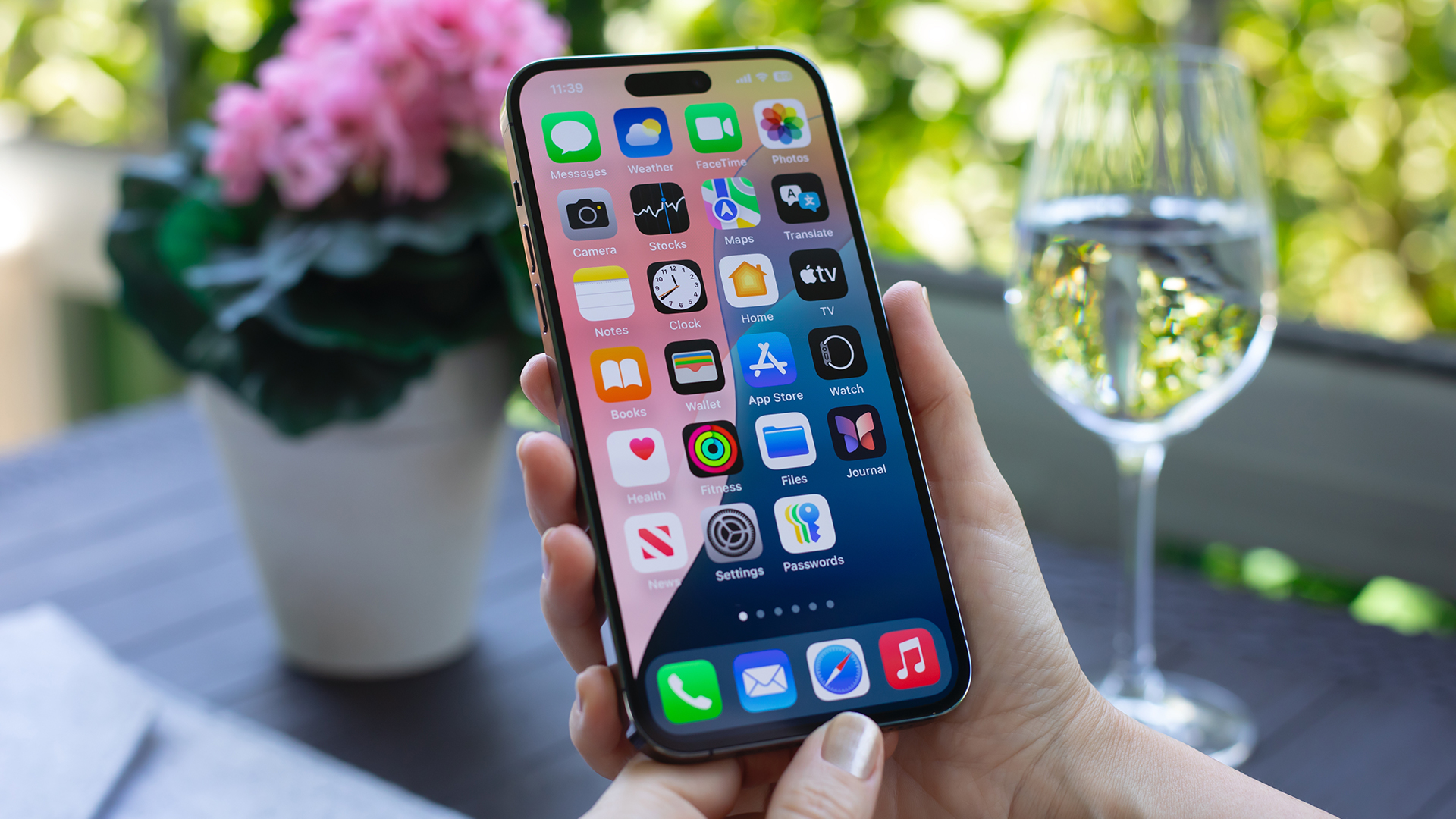
Image = A person holds a modern smartphone displaying a grid of app icons on its home screen while seated outdoors at a table, with a blurred potted plant featuring pink flowers on the left and a clear wine glass filled with water on the right, set against a bright green garden background in natural daylight.
To learn more about me as an award winning sight loss coach and advocate visit http://www.donnajodhan.com