
Greetings readers and I’m Christian Robicheau at the Sterling Creations desk.
Summer continues and let’s just enjoy.
Today, our president Donna J. Jodhan focuses her attention on accessible telecasts.
Donna would love to hear from you.
You can write to her at donnajodhan@sterlingcreations.ca.
Enjoy your weekend.
+++++++++++++++
What Makes For An Enjoyable Telecast
By Donna J. Jodhan
An enjoyable telecast is not simply about polished appearances, flashy graphics, or delivering information at lightning speed. In today’s broadcasting world, far too much emphasis is placed on looking good and getting the message out as quickly as possible.
News casts, talk shows, and morning programs often seem to compete over who can speak the fastest. While energy and efficiency may appeal to some viewers, there is a serious downside: many listeners can barely keep up, let alone fully understand what is being said.
This creates real barriers for several groups of persons with disabilities. For those who are blind or vision impaired, clear speech is essential because they rely heavily on audio details. For people with learning disabilities or cognitive challenges, rapid-fire delivery can make comprehension extremely difficult. Seniors and those who are hard of hearing also struggle when hosts race through conversations, headlines, and interviews without proper pacing or diction.
Communication should never sacrifice clarity for speed.
Television hosts and hostesses have an important responsibility. They should pay closer attention to how they speak, how fast they speak, and whether their diction allows all viewers to follow along comfortably. Good broadcasting is not about cramming as many words as possible into a minute. It is about connecting with audiences in a way that is inclusive, respectful, and understandable.
I especially urge CTV Television Network in Canada to examine this issue more carefully. Programs such as the Good Morning Canada show, as well as the broadcasts airing at 10 a.m. Eastern and 2 p.m. Eastern, would benefit greatly from a more measured and listener-friendly approach.
A truly enjoyable telecast is one where viewers do not feel rushed, excluded, or left behind. Clear communication, thoughtful pacing, and accessibility should matter just as much as appearance and speed.
I’d like to leave you with this for your consideration.
A cozy den is dimly lit by the glow of a television screen. On the TV, the bold words “Good Morning Canada” stretch across the center, while the familiar CTV logo sits at the top of the screen. The morning program appears lively and fast-paced, with presenters talking animatedly.
Seated on a couch are two viewers, both wearing unmistakable expressions of exhaustion and frustration. One person wears visible hearing aids and leans forward intensely, straining to follow the rapid conversation on the television. Their eyebrows are furrowed, and their body language reflects the stress of constantly trying to catch every missed word. The closed captions are either unclear, delayed, or absent, leaving them disconnected from the discussion.
Beside them sits a person with a white cane resting nearby, indicating vision impairment. They stare toward the screen with confusion and disappointment, unable to make sense of what is happening because important visual details are never described aloud. Their face shows helplessness and isolation, as though the program was never designed with them in mind.
The atmosphere in the room is heavy with discouragement. Although both individuals are watching the same program together, each experiences a different barrier to access. The television, meant to inform and connect Canadians, instead becomes a symbol of exclusion and misunderstanding.
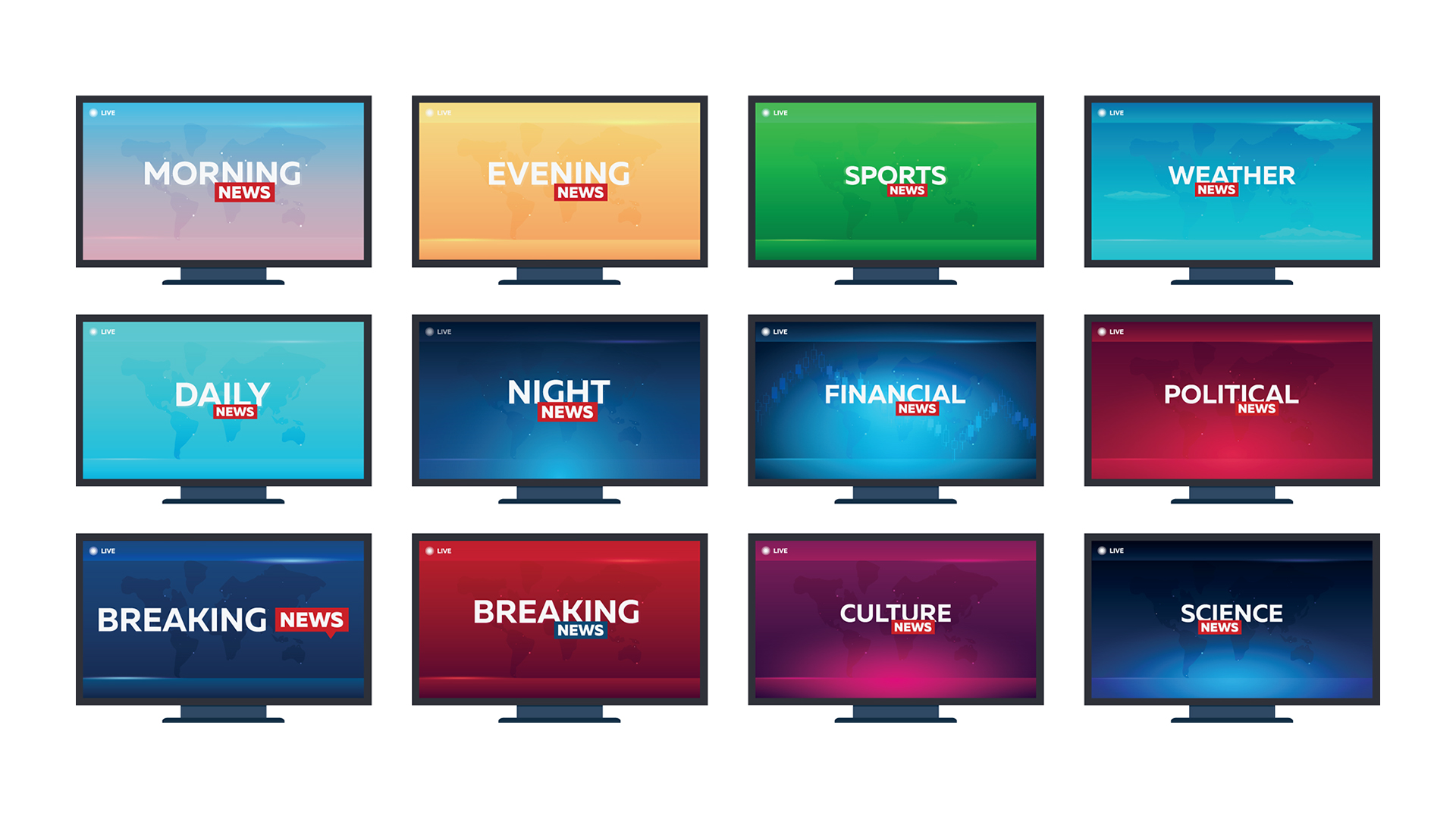
Image = Grid of twelve flat-screen monitors arranged in three rows, each displaying a different news category with colorful gradient backgrounds and a faint world map silhouette, including labels such as morning news, evening news, sports news, weather news, daily news, night news, financial news, political news, breaking news, culture news, and science news, with small live indicators in the corner of each screen.
To learn more about me as an award-winning sight loss coach and advocate visit https://donnajodhan.com.